DYNAMICTRANSPORTATION
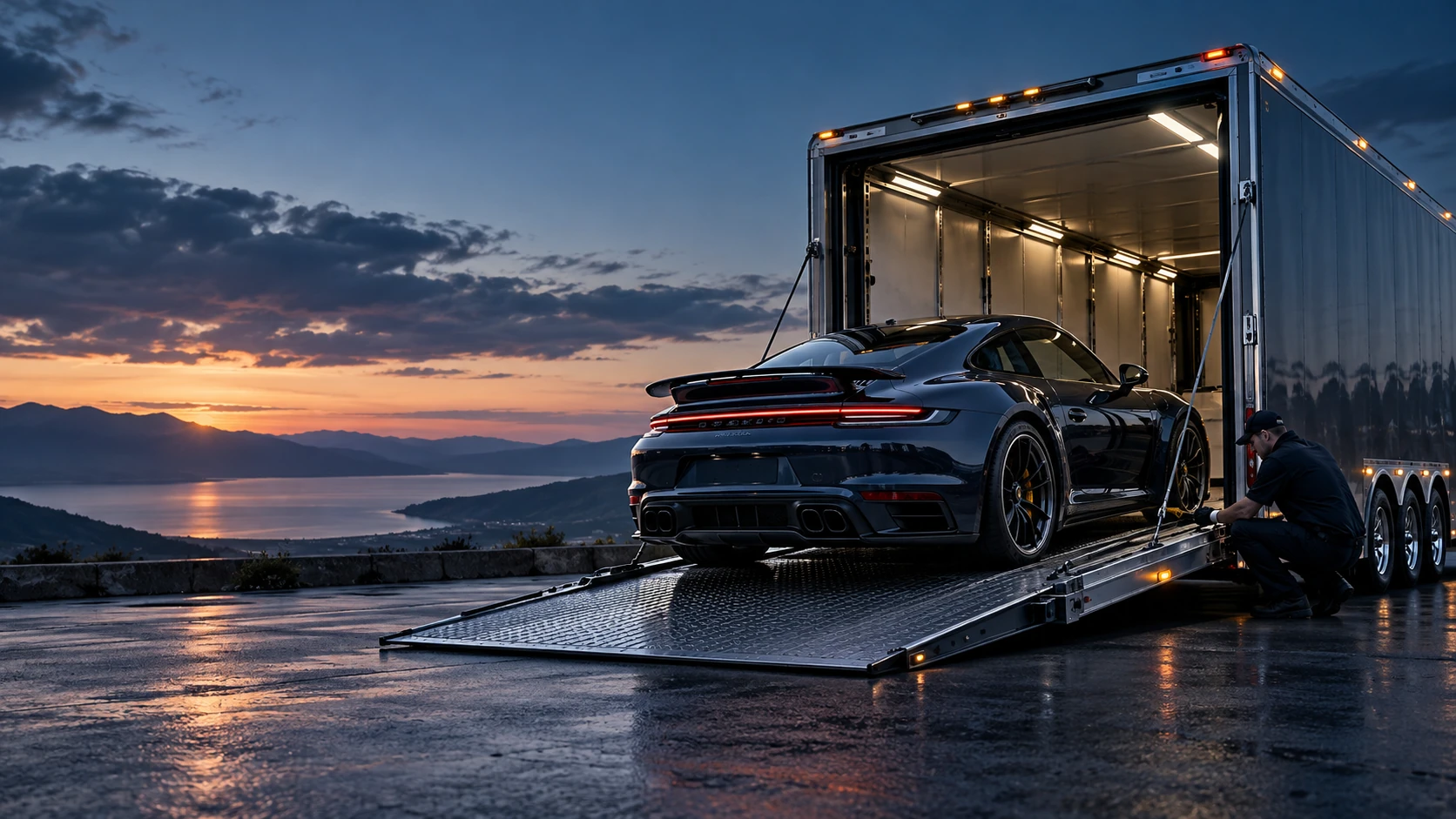
Sports car being secured on the ramp of an enclosed trailer at dusk

Enclosed auto transport

Additional protection
for vehicles that deserve it.

Enclosed transport moves your vehicle inside a covered carrier. Often chosen for exotics, classics, collectors and other high-value vehicles, it reduces exposure while keeping equipment and handling requirements specific to the shipment.

A covered carrier

What is enclosed
auto transport?

A cover changes the exposure.
The handling still needs a plan.

The vehicle travels inside a covered trailer rather than on an open carrier. This helps reduce exposure to weather, road debris and general highway conditions.

It is often chosen for exotic, classic, collector, luxury, low-clearance or high-value vehicles. It does not mean zero risk, guaranteed damage prevention or identical equipment on every shipment.

The right choice considers the vehicle, the route and your preference for reduced exposure.

When enclosed makes sense

The vehicle sets
the requirements.

Choose reduced exposure for a reason that matters to your shipment.

Enclosed transport can offer a more controlled loading environment. Trailer capacity and handling arrangements vary, so confirm the actual configuration rather than assuming every enclosed move is the same.

  1. 01

    Exotics & luxury vehicles

    For vehicles where reduced weather and road exposure is a priority, alongside a review of the loading requirements.

  2. 02

    Classics & collector cars

    Discuss the vehicle’s condition, starting procedure and any handling instructions that differ from a standard shipment.

  3. 03

    Low-clearance & modified vehicles

    Splitters, lowered suspension and modified aero need equipment review. Enclosed does not automatically mean every trailer will fit.

  4. 04

    High-value purchases, shows & events

    Coordinate release instructions, access and dates around the shipment. Some enclosed equipment carries fewer vehicles; configurations and availability vary.

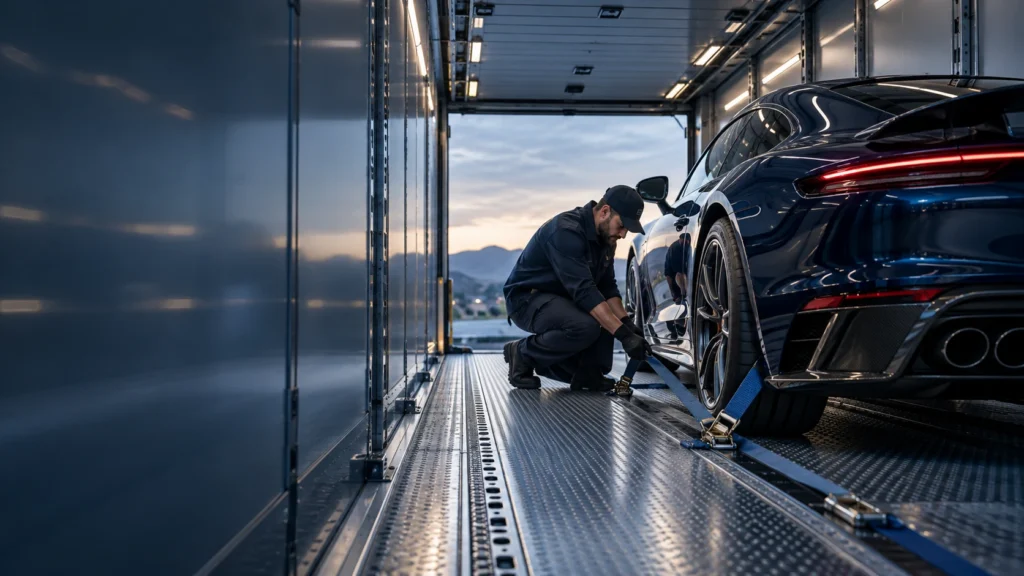
Technician fastening a wheel strap inside an enclosed trailer
Loading and securement details. Actual equipment and procedures vary by vehicle and carrier.

Loading & securement

Protected from the outside.
Secured on the inside.

A covered trailer is only part of the decision.

Depending on the carrier and vehicle, enclosed equipment may use ramps, hydraulic liftgates, or other loading configurations. The approach needs to suit the vehicle’s clearance and condition.

  • Review the loading method. Share clearance and access details before the carrier is assigned.
  • Use appropriate securement. The driver handles wheel/tire straps or other securement suited to the vehicle and trailer. Soft straps may be used where appropriate.
  • Keep the handoff controlled. Review the inspection record and follow the driver’s loading-area instructions.

How it works

The same clear handoffs.
Equipment chosen with care.

Dynamic coordinates the shipment.
The motor carrier handles loading and road transport.

  1. 01

    Price your route

    Share the route, dates and vehicle details. Tell us about dimensions, ground clearance, modifications and condition from the start.

  2. 02

    We coordinate enclosed equipment

    We review carrier availability, trailer suitability, loading method and access requirements for your shipment.

  3. 03

    Pickup, inspection & loading

    Review the condition record with the driver. The motor carrier handles loading and securement using the agreed equipment.

  4. 04

    Delivery & final inspection

    Meet the driver, review the vehicle and note any concerns on the transport paperwork before the handoff is complete.

Choose the right exposure

Enclosed or open?

More coverage is a preference.
Equipment suitability is a requirement.

01 / Enclosed transport

Reduced exposure.

Often considered for exotics, classics, collectors, high-value vehicles and a preference for covered transport.

  • Covered trailer environment
  • Vehicle-specific loading review
  • Route and equipment availability need confirmation
Price enclosed transport

02 / Open transport

The everyday option.

A practical choice for many everyday vehicles and standard shipments, especially when typical cost and broader availability matter.

  • Common nationwide carrier capacity
  • Generally the more economical option
  • Vehicle travels on an exposed trailer
Explore Open Transport

Route-specific pricing

The route.
The vehicle.
The right equipment.

What affects enclosed pricing?

Enclosed availability can be more limited. The shipment details and available carrier options determine the quote—not a fixed upgrade applied to every move.

Price My Route
Route & enclosed availability
Distance is only part of the picture. Enclosed capacity is usually more limited than open capacity, so availability and pricing can vary more by route and timing.
Dimensions & ground clearance
Vehicle length, width, height and clearance affect trailer suitability and loading configuration. Disclose modifications before equipment is matched.
Condition & special handling
Starting, rolling, steering, braking and battery issues can change the equipment and handling required. A non-running vehicle needs review.
Access, dates & flexibility
Large equipment needs suitable loading space. Pickup and delivery access, tighter windows and date flexibility all affect coordination and carrier options.

Before pickup

Prepare the vehicle.
Share the details.

Small details can change the equipment needed.
Confirm instructions with our team and the carrier.

  1. 01

    Confirm dimensions and clearance.

    Share the vehicle’s length, width, height and lowest clearance where known. Tell us when a measurement needs specialist review.

  2. 02

    Disclose modifications.

    Mention splitters, lowered suspension, wide-body kits, aero and any change that affects loading or trailer space.

  3. 03

    Keep fuel around a quarter tank.

    Leave enough fuel for loading and unloading without the weight of a full tank.

  4. 04

    Declare and secure personal items.

    Personal items must be securely packed and kept below the window line. Carrier acceptance may vary.

  5. 05

    Have keys and instructions ready.

    Provide a working key and explain starting procedures, alarms, immobilizers or battery-disconnect instructions.

  6. 06

    Photograph the vehicle’s condition.

    Take clear photos before pickup and review the inspection record with the driver.

  7. 07

    Confirm pickup and delivery access.

    Check contact names, phone numbers, release instructions and a suitable place for the carrier to position and load.

  8. 08

    Explain any operating issues.

    Tell us about battery, starting, rolling, steering or braking problems before carrier assignment—even if the vehicle runs occasionally.

Special handling starts with disclosure

Clearance matters.

Tell us before carrier assignment.
Photos and measurements help the review.

A covered trailer is not an automatic fit for a low vehicle.

Low splitters, lowered suspension, a long wheelbase and modified aero can affect the loading approach. Share what has changed and where the vehicle’s lowest points sit.

Non-running vehicles, weak batteries and steering or brake issues need separate handling review. Describe what the vehicle can do today, including intermittent faults.

Talk through the handling requirements

Why Dynamic

Special vehicles need
specific answers.

Route-specific coordination.
Human support when details matter.

We’re a broker. We review enclosed equipment availability, vehicle requirements and access with motor carriers, coordinate the handoffs and keep a real team available to discuss the shipment.

For a private move, a vehicle purchase or business inventory, the same principle applies: review the handling before assignment and communicate the next step clearly.

BBB Accredited Business. View our BBB profile ↗

Frequently asked questions

Know the equipment.
Understand the move.

Have a vehicle-specific question?
Call 610-334-6776

What is enclosed auto transport?

Your vehicle travels inside a covered trailer rather than on an exposed carrier. Dynamic coordinates the shipment with a motor carrier whose equipment is suitable for the vehicle and route.

Is enclosed transport safer than open transport?

A covered trailer helps reduce exposure to weather, road debris and general highway conditions. It does not remove every transport risk. Equipment suitability, handling and inspection still matter.

What types of vehicles should use enclosed shipping?

It is often considered for exotics, classics, collectors, luxury or high-value vehicles, and shipments where reduced exposure is preferred. Clearance, dimensions and condition must still be reviewed.

Do enclosed carriers use liftgates?

Some do. Depending on the carrier and vehicle, enclosed equipment may use ramps, hydraulic liftgates, or other loading configurations. Confirm the actual equipment with our team before assignment.

Can low-clearance cars be transported?

Many can, with suitable equipment and advance review. Share the lowest clearance, wheelbase information where available, splitter details and modifications. Do not assume any enclosed trailer will fit.

Can you ship an inoperable vehicle enclosed?

Some non-running vehicles can be moved with appropriate equipment. Tell us whether the vehicle starts, rolls, steers and brakes so handling and carrier requirements can be reviewed.

How much more does enclosed transport cost?

There is no single fixed difference. Route, dates, enclosed capacity, dimensions, condition and handling requirements shape the price. Use Price My Route, then review shipment-specific requirements with our team.

Can I put personal items inside the vehicle?

Declare the items and weight bracket in Price My Route. Personal items must be securely packed and kept below the window line. Carrier acceptance may vary. Do not assume personal belongings are covered by a carrier’s cargo policy; ask about the applicable coverage.

Is enclosed transport door-to-door?

We coordinate pickup and delivery as close to the requested addresses as the carrier can safely and legally access. If the truck cannot reach a location, arrange a suitable nearby meeting point with the driver.

How long does enclosed transport take?

The route, equipment availability, carrier schedule, loading requirements and road conditions all affect timing. We discuss the pickup window and estimated transit time for your shipment; estimates are not guaranteed appointments.

Start with the details

Ready to price
enclosed transport?

Share the route and vehicle details so we can review enclosed availability and handling requirements.